
Reviewed · TAHITI TOURS
Papeete Food Tour
Papeete’s best introduction may be edible: poisson cru, fresh fish dressed with coconut milk, followed by market snacks, banana crepes, fish fritters, coconut sweets, and modern local bites. Orama, a Papeete native, connects every taste to the city and to her own life in Tahiti.
I like the maximum six-person group, which keeps the walk friendly and lets Orama adjust the pace. I also like the mix of market stalls, cafés, family-run food spots, and cultural stops rather than one long restaurant meal. The main consideration is the food: this tour is not suitable for vegetarian, vegan, or gluten-free diets, and you should arrive ready to eat.
Key points at a glance
- At least 10 tastings: Expect a broad mix of sweet, savory, traditional, French, Chinese, and modern Tahitian flavors.
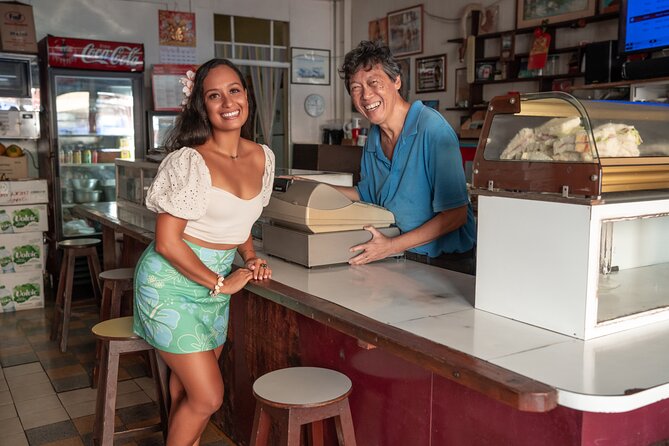
- Orama’s personal connection: Your local guide was born in Papeete and shares family, cultural, and city stories along the route.
- A compact walking route: The tour covers central Papeete, including the market, cathedral, shopping centers, and small food addresses.
- Small groups matter: With no more than six people, you can ask questions and keep the morning relaxed.
- Best early in your stay: The tour gives you practical ideas for places to eat and helps you get oriented in downtown Papeete.
- Food restrictions are important: Meals, snacks, and tastings center on local foods that may include fish, dairy, coconut, wheat, and other common ingredients.
Why this morning works so well in Papeete
Papeete can feel easier once you understand how its food fits together. Tahitian cooking is not one narrow tradition. Polynesian ingredients meet French habits, Chinese family cooking, bakery culture, modern snack bars, and imported products from across the Pacific.
That mix is the real point of this experience. You are not simply handed a plate and told what it is. Orama uses food to explain how people in Papeete eat, shop, socialize, and carry several cultural influences at once.
The timing helps. Starting at 8:30 a.m. gives you the city while the morning is still moving at an easy pace. The walk lasts about three and a half hours, so you finish around midday with a useful part of the day still ahead.
I would book it near the beginning of a Tahiti stay. You get a feel for the central streets, learn where the market is, and come away with food ideas for later. One useful benefit is simple confidence: after this walk, Papeete’s center and market are less puzzling to navigate on your own.
more Tahiti days to compare
- Moorea Street Food Tour
★ 5.0 · 410 reviews - Papeete Food & City Tour
★ 5.0 · 59 reviews - Bora Bora Gourmet Odyssey – Food Tour
★ 5.0 · 15 reviews
Breakfast begins with local flavor
The meeting point is Terre de Vigne on Rue Paul Gauguin, with the tour beginning at 8:30 a.m. From there, the first stop leads into a typical breakfast.
The morning starts with coffee, coconut milk, and a fresh-baked treat, then moves toward poisson cru, the well-known raw fish preparation served with coconut milk. For many people, this is the first real test of local Tahitian food. If raw fish makes you hesitate, the small tasting format gives you a chance to try it without committing to a full dish.
The breakfast is more than fuel. It sets up one of the tour’s useful themes: familiar ingredients can taste completely different when prepared in a local way. Coconut appears in drinks, sweets, baked foods, and savory dishes. Fish may turn up in forms ranging from raw preparations to fritters and sandwiches.
You should arrive hungry, but not expect a single large breakfast plate. The food is served in portions designed to let you keep sampling. That matters because the tour includes many stops, and filling up at the first café would work against the whole idea.
Papeete Market is the heart of the route
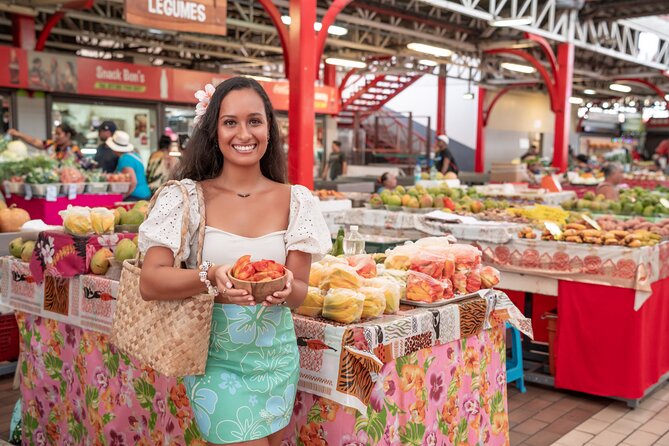
The longest portion of the morning is spent around Papeete Market, where you have about an hour and a half to see the flower stands, crafts, jewelry, produce aisles, and snack counters.
This is the part I would especially value if you want more than a restaurant meal. A market shows the daily side of a place. You can see what is sold, how food is displayed, and how the market connects produce, prepared snacks, crafts, and local shopping.
Orama helps you read the place instead of merely walking through it. She points out foods and stalls that can be easy to miss, then explains what you are tasting and why it matters. The market also gives the tour room to breathe. You are not rushing from one formal stop to the next.
The tastings may include fish beignets, coconut-based sweets, banana crepes, and other local snacks. The exact selection can vary, but the advertised minimum is 10 tastings across the morning. Some food is traditional, while some reflects the French and Asian influences that shape modern Papeete.
There is also time to look at nonfood stalls. Flowers, jewelry, crafts, and produce help you see the market as part of everyday city life, not just a stop designed for sightseeing.
A small caution: the market is a working public place, not a carefully staged food hall. You may find the route more interesting for its local character than for polished presentation. That is a strength if you want an ordinary Papeete experience, but less so if you prefer a formal culinary class.
Chinese and French influences add depth

The stop at the Association Philanthropique Chinoise takes about 20 minutes. It gives the morning a cultural turn and helps explain why Papeete food cannot be reduced to one Polynesian style.
Chinese influence is part of the city’s food identity, and the tour uses this stop to show the broader cultural mix of French Polynesia. You may already notice that mixture in the food, but the cultural explanation gives it a clearer shape.
Next comes the Catholic Cathedral, located at PK 0, the city’s kilometer marker. The stop is brief, about 20 minutes, but it adds context to the walk. You are not only moving between places to eat. You are also learning how central Papeete is organized and why certain city landmarks matter.
Orama has used old photographs during the tour to show how parts of Papeete looked in earlier periods. That visual touch can make the city’s changes easier to understand than a string of dates or names.
The cathedral stop will not satisfy someone looking for a full architectural tour. It is a short passage in front of an important landmark. Its value comes from fitting the building into the larger story of the city.
Out of the water for a day on Tahiti:
- 5 Hours Tahiti Island Tour – West and East Coast
★ 5.0 · 1,020 reviews - Crossing Island of Tahiti 4×4 Mountain, Waterfall, River, Basins
★ 4.5 · 532 reviews - Découvrez le Mana durant la traversée de Tahiti en 4×4 Safari
★ 5.0 · 456 reviews - Unique Tahiti Tour – personalised, small group east coast tour
★ 4.5 · 314 reviews
Shopping centers reveal the modern side of Tahitian food
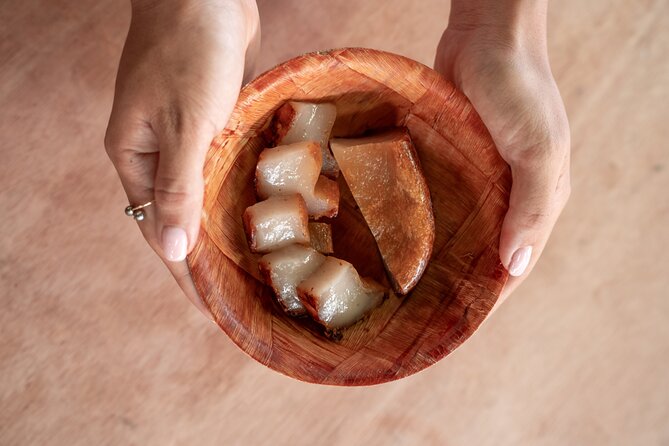
The route continues to Fare Tony Center, a commercial gallery where the focus turns toward Polynesian products and what the islands make and sell.
This stop helps balance the market. The market shows fresh produce and prepared food in a traditional public setting, while the shopping center points toward packaged flavors, commercial products, and newer ways of presenting local ingredients.
At Vaima Shopping Centre, you continue walking and tasting for about 30 minutes. These commercial stops may sound less atmospheric than the market, but they help you see that Tahitian food culture is not frozen in the past. Local cooking lives alongside French-style cafés, imported goods, shops, and contemporary food businesses.
The route also includes cafés, restaurants, market stalls, and other food addresses. That variety is one of the tour’s strongest features. You might taste a snack at a counter, sit down briefly for a dish, then continue on foot to another stop. The experience feels closer to eating around town with a local friend than attending a single restaurant tasting menu.
What you are likely to taste

The tour promises a minimum of 10 tastings, and the examples shared for the morning cover a wide range:
- Poisson cru, raw fish with coconut milk
- Coffee and coconut milk
- Fresh-baked breakfast treats
- Fish beignets
- Fish burgers
- Banana crepes
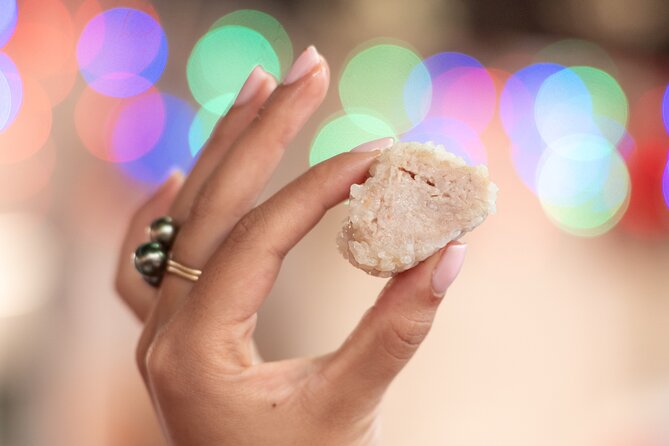
- Coconut sweets and baked coconut treats
- Local rum or other Polynesian products at a bottle shop
- Sweet dishes such as papaya pie with ice cream
- Modern snacks using familiar ingredients in unexpected ways
Not every departure will necessarily include every item above. The tour description promises at least 10 tastings, while the exact foods can depend on what is available that morning.
The portion size is worth noting. You are not expected to eat 10 full meals. Tastings are kept manageable so you can sample both savory and sweet foods without stopping early.
This is also a good tour for cautious eaters who want a gentle push. One especially useful feature is the range of preparations. If you are uncertain about raw fish, you may find a fried fish snack or sandwich easier at first. If coconut is familiar to you only as shredded topping, the morning may show it as a drink, dessert, breading, or creamy ingredient.
The tour is not a fit for strict dietary restrictions. The provided information specifically excludes vegetarian, vegan, and gluten-free diets. If you have another allergy or medical food concern, you should clarify it before booking rather than rely on substitutions.
Orama is a major part of the experience
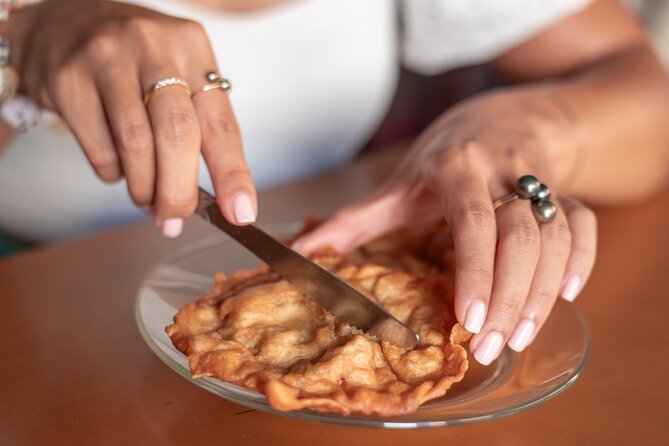
Orama is the local guide and the creator of the experience. Her connection to Papeete is central: she was born there, grew up in Tahiti, and presents the city through both local roots and an outward-looking perspective.
She speaks French and English fluently between groups, which is useful in a place where language and culture overlap. Her role is not limited to naming dishes. She explains food origins, shares personal stories, uses historical photos, and answers questions about Papeete.
Her local relationships also shape the route. Food sellers and shop owners know her, which can make the stops feel more natural and less like a standard commercial circuit. The important point for you is not celebrity access. It is that the tour reaches places you might pass without knowing what to order or how to begin.
The group limit of six supports this style. A large group would be awkward in small cafés and market aisles. With six or fewer, you can hear the explanations, ask for clarification, and move at a human pace.
The schedule has a planned route, but the morning can adjust to the group. That flexibility is useful in a food tour, where a shop may be busy or a tasting may take longer than expected.
Is $129.97 a fair price?
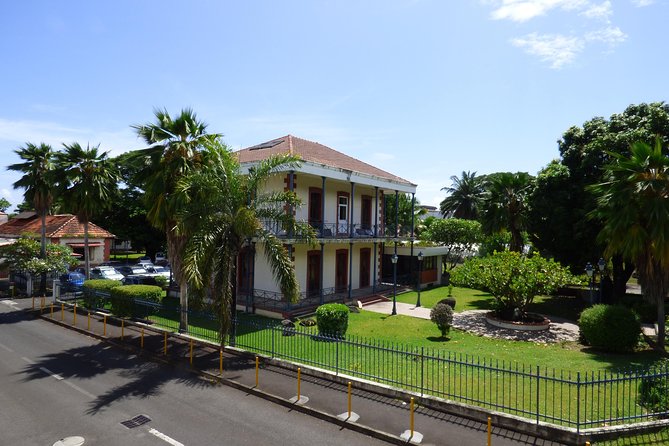
At $129.97 per person, this is not a cheap breakfast. The price makes more sense when you count what is included: roughly three and a half hours with a local guide, at least 10 tastings, bottled water, market time, cultural stops, and recommendations for the rest of your stay.
You are also paying for access to local food addresses and for the explanation around each dish. If you simply want the lowest-cost way to eat in Papeete, you can spend less by choosing one café or market stall yourself.
I see the value in the orientation. The tour can save you from guessing where to go on your first morning, and it gives you a short list of places to revisit. Several stops are easy to find again because the walk ends at Papeete Market, right in the center and near taxis.
The small group is another part of the price. A private tour would cost more, while a large group might cost less but offer a less personal experience. For a compact city food walk, a maximum of six is a useful middle ground.
Practical details before you book
The start point is Terre de Vigne at 52 Rue Paul Gauguin in Papeete. The end point is Papeete Market, BP4588, in the center of town. Since the tour ends near taxis and public transportation, you can continue sightseeing, shopping, or return to your accommodation afterward.
Private transportation is not included, and neither are parking fees. Plan to reach the meeting point on your own. One important practical tip is to check the written directions sent after booking, since the map location may not always show the correct start point.
The tour requires good weather and a minimum number of participants. If poor weather or insufficient bookings cancel the experience, you can choose another date or receive a full refund. You can also cancel for a full refund up to 24 hours before the start time. Changes or cancellations inside that 24-hour window are not accepted.
Most people can take part, but this is still a walking food tour through markets, shops, and downtown streets. Wear comfortable shoes and leave room in your appetite.
Who should book the Papeete Food Tour?
I would choose this for anyone who wants food and place explained together. It suits first-time visitors, people staying in Papeete before visiting another island, and anyone who likes tasting several small portions instead of ordering one unknown dish.
It is also useful for honeymooners and cruise or short-stay visitors who want a strong introduction in a limited amount of time. The tour gives you local food, city orientation, market time, and practical restaurant suggestions in one morning.
I would skip it if you need vegetarian, vegan, or gluten-free food, or if you dislike eating fish and coconut. I would also think twice if your main goal is a formal cooking lesson, since this is a walking tasting tour rather than a class.
Should you book it?
Book it if you want an easy, personal introduction to Papeete’s food culture. Orama’s local background, the small group, and the mix of market stalls and lesser-known eating spots give the morning real value.
Book it early in your stay if possible. You will understand the city faster, know what to order later, and have a better sense of where to eat after the tour ends. At $129.97, it is a premium morning, but the number of tastings and the personal guidance make it a sensible choice for food-focused visitors who want more than a standard city walk.
FAQ
How long is the Papeete Food Tour?
The experience lasts approximately 3 hours and 30 minutes. It begins at 8:30 a.m.
Where does the tour start and end?
It starts at Terre de Vigne, 52 Rue Paul Gauguin, Papeete. It ends at Papeete Market in central Papeete, near taxis and public transportation.
How many tastings are included?
The tour includes a minimum of 10 tastings, along with bottled water and a guide.
Is transportation included?
No. Private transportation and parking fees are not included. You are responsible for reaching the starting point.
Is the tour suitable for vegetarian, vegan, or gluten-free diets?
No. The experience is not suitable for vegetarian, vegan, or gluten-free diets.
What happens if the tour is canceled because of weather?
If poor weather cancels the experience, you will be offered another date or a full refund. The same options apply if the minimum number of participants is not reached.
Just added on Tahiti
- Tahiti E-bike, mtb, vtt Tour with Swimming and Lunch★ 4.0 · 3 reviews
- Papeete Market Place★ 3.0 · 3 reviews
- Whale watching DE Humpback West Coast of Tahiti★ 5.0 · 3 reviews
- Private Transfer Papeete Urban Area to Tahiti Airport PPT by Van★ 5.0 · 3 reviews
- Papeete City Tour, 3hours (on Tahiti)★ 5.0 · 3 reviews
- Tahiti: Northeast Coast Waterfalls&Viewpoints Half Day Tour★ 5.0 · 3 reviews
- Tahiti: Private Half Day Culture and Nature Highlights Tour★ 5.0 · 3 reviews
- Tahiti: Full Day Tour with Private Flight EN Cessna (Moorea & Tahiti)★ 3.5 · 3 reviews
Tahiti Tours, compared.
5 Hours Tahiti Island Tour – West and East Coast
Read our review →
Crossing Island of Tahiti 4×4 Mountain, Waterfall, River, Basins
Read our review →
Découvrez le Mana durant la traversée de Tahiti en 4×4 Safari
Read our review →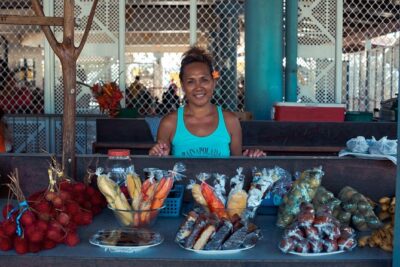

Unique Tahiti Tour – personalised, small group east coast tour
Read our review →

Browse the lists this tour appears in