
Reviewed · BORA BORA TOURS
2 Dives in the morning for certified divers in Bora Bora
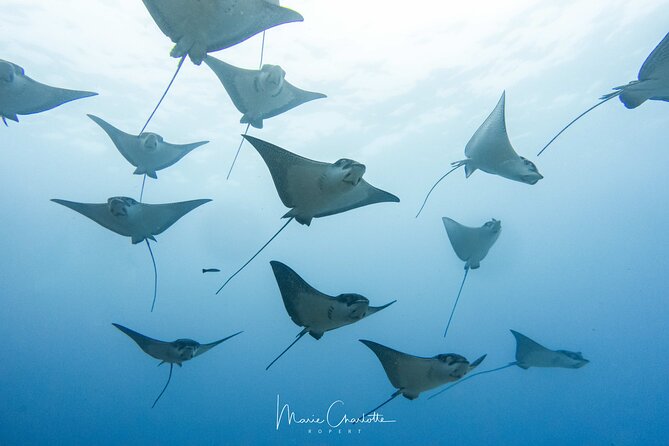
Bora Bora’s big underwater draw is the chance to see giant manta rays gliding close overhead, along with black-tip reef sharks, eagle rays, eels, turtles, and colorful reef fish. The morning normally includes one lagoon site and one outer-reef site, with conditions deciding the final order.
I like the five-person maximum, which gives your instructor room to watch air use, comfort, and buoyancy. I also like the practical setup: pickup by boat or car, prepared equipment, a diver-friendly aluminum boat, and fresh water, tea, and cookies between sessions.
The main consideration is that wildlife is never guaranteed, and the outer-reef current can be demanding. Each session is planned for roughly 45 to 60 minutes, but your actual time underwater may be shorter if you use air quickly or the conditions change.
Key points to know before booking
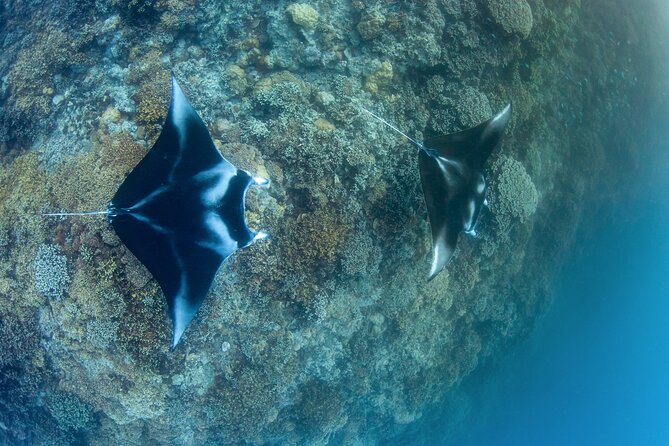
- Manta rays are the headline sight: Lagoon sites can bring you close to several large mantas, sometimes passing just above you.
- Two different underwater settings: You will usually visit one lagoon location and one site outside the reef.
- Small groups matter: A maximum of five certified divers allows close supervision and a calmer pace.
- Pickup is included: The operator collects you by boat or car, depending on where you stay.
- The boat is built for scuba: A roof, ladders, and protective features make gear handling easier.
- Free Nitrox is available: Ask for it if you hold Nitrox certification.
Two morning sessions in Bora Bora’s best conditions
This is a short, focused morning rather than an all-day boating trip. The published duration is about four hours, with operating hours from 7:30 a.m. to noon. That timing works well if you want your afternoon free for the beach, a lagoon cruise, or a relaxed lunch.
The exact sites are not locked in advance. The crew checks the sea and weather, then chooses the best available combination. You can usually expect one session inside the lagoon and another beyond the reef, giving you two noticeably different underwater settings in a single outing.
That flexibility is useful in Bora Bora. Water movement, visibility, and animal activity can vary by location and day. A fixed route might sound reassuring, but allowing the crew to adjust the plan gives them a better chance of choosing comfortable conditions and finding active marine life.
You will be asked to confirm that you are certified to descend to 18 meters, or 60 feet. Acceptable qualifications include PADI Open Water Diver, SSI Open Water Diver, CMAS one-star, Level 1, and NAUI Scuba Diver. Your last scuba session must have been less than one year ago.
That rule is important. This is not a refresher course for someone who has been out of the water for several years. If your certification is current but your skills feel rusty, tell the instructor before entering the water. The crew can match the pace to your ability, but you remain responsible for being honest about your comfort and recent experience.
More Diving Trips in Bora Bora
- Aqua Safari Introductory Helmet Dive (Underwater Walk)
★ 5.0 · 428 reviews - Introductory Dive in Bora Bora (afternoon)
★ 5.0 · 138 reviews - Romantic dive in the lagoon of Bora Bora. Private instructor on a shared boat
★ 5.0 · 54 reviews
The boat ride and pickup arrangements
Pickup and return are included, which is especially useful in a place where many resorts sit along separate motus or waterfront areas. Depending on where you are staying, the crew may collect you by boat or by car.
The boat may pick up additional certified divers along the way. That means the fastest possible transfer is not guaranteed, although the operator aims to reach the site efficiently. I would allow some flexibility in your morning schedule rather than planning another activity immediately after the stated noon finish.
The aluminum boat is designed with scuba users in mind. It has a roof for shade, ladders for getting back aboard, and protective features that make the ride and equipment handling less awkward. Those details matter once you are carrying a tank, wearing fins, or climbing aboard after a long session.
A few people may share the boat even though the underwater group is limited to five certified divers. The important number is the group in the water, where supervision and spacing affect your experience most.
First session: lagoon waters and manta rays
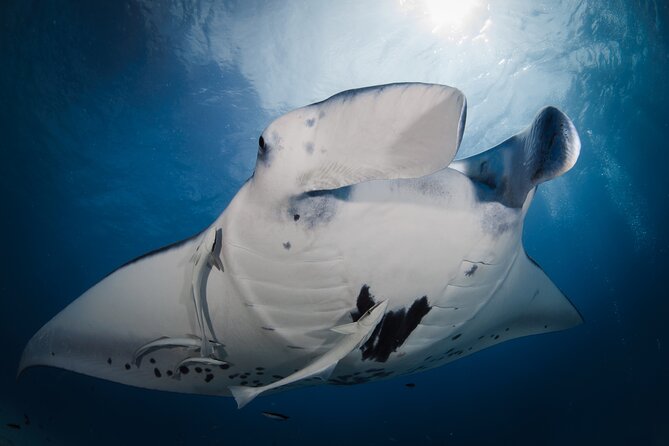
The lagoon is often the most anticipated part of the morning. This is where you may encounter giant manta rays, sometimes in groups. The animals can pass slowly overhead while smaller fish clean them, creating one of those rare wildlife moments that requires patience rather than pursuit.
The crew’s approach is respectful. The guides do not bait sharks or allow divers to chase mantas. That is good for the animals and good for you. A calm diver who holds position is far more likely to enjoy a close encounter than someone who kicks after a ray and sends it away.
You may also see tropical fish, sea turtles, and other lagoon species. One account describes mantas making several passes only a few feet above the divers. That kind of proximity cannot be promised, but the lagoon clearly offers the possibility of an intimate view rather than a distant glimpse.
The water is described as warm with clear visibility, though conditions vary. If you are newly certified, the lagoon can be a reassuring place to settle into your breathing and buoyancy before the second session. Still, it is not a guaranteed easy swim. Your comfort depends on current, visibility, and how well you handle your equipment.
Your instructor leads the group and points out marine life. Guides named in the feedback include Pascal, Nicholas, Niki, Arthur, Flo, Amoury, and JP. The specific guide on your morning will depend on the schedule, but the repeated pattern is clear: the crew places weight on calm supervision, safety checks, and spotting animals without disturbing them.
Surface interval with tea, water, and cookies
Between the two sessions, the boat provides fresh water, hot tea, and cookies. This is simple, but it is exactly what you want after spending 45 to 60 minutes in the water.
Use the interval to drink, warm up, check your air and equipment, and tell the instructor if anything felt uncomfortable. The crew may prepare or switch your second tank while you rest. One person specifically noted that the staff moved the equipment over before the second session, which saves you from wrestling with wet gear on a moving boat.
The break is not a full meal. Bring your expectations down to a light snack, not breakfast. If you need a substantial meal early in the day, eat before pickup according to your own pre-scuba routine.
This is also your chance to ask about Nitrox. It is free for divers who hold Nitrox certification. You still need to request it, and you should carry proof of the qualification if required by the operator.
more dive sites off Bora Bora
- Romantic Dive for beginners in Bora Bora (2 people) with Video
★ 5.0 · 18 reviews - Bora Bora: Introductory Dive
★ 4.9 · 18 reviews - 1 Afternoon Dive for Certified Divers in Bora Bora
★ 5.0 · 18 reviews - Combo Diving and Snorkeling Full Day Tour
★ 5.0 · 15 reviews
Second session: outer reef, sharks, and current
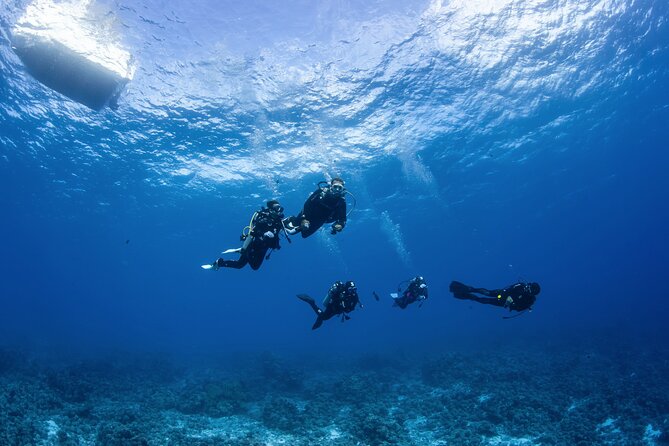
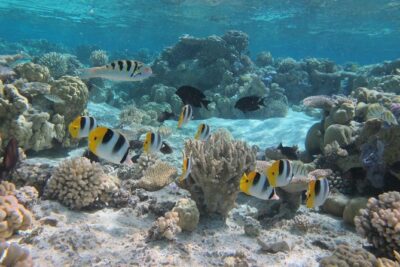
The second location is often outside the reef. Here the scenery can shift from lagoon encounters to coral, reef fish, black-tip reef sharks, eels, octopus, lionfish, shrimp, and eagle rays.
Several people describe the outer-reef site as particularly memorable for coral and fish life. One account included white-tip sharks, eels, a cave swim-through, and clear water. Another described seeing roughly 40 sharks and three large manta rays across the morning. These are individual sightings, not a promise, but they show how much variety can appear in two sessions.
The outer reef can also bring more current. A strong drift made one session challenging for an experienced participant. That does not mean the site is unsafe, but it does mean you should be comfortable following a guide, maintaining control of your buoyancy, and managing your air in moving water.
Your underwater time is listed as roughly 45 to 60 minutes at around 15 to 20 meters. Your certification limit is 18 meters, so the stated depth range deserves attention. The guide will set the final profile, and conditions or your air supply may shorten the session.
One person noted that a fellow diver used up air in about 30 minutes, making the planned session shorter. That is not a fault in the operation, but it is a useful warning. Air consumption differs widely, especially in current, cold water, or when you are excited. If you are an air-heavy diver, say so early and ask how the group will be managed.
Equipment, instruction, and safety
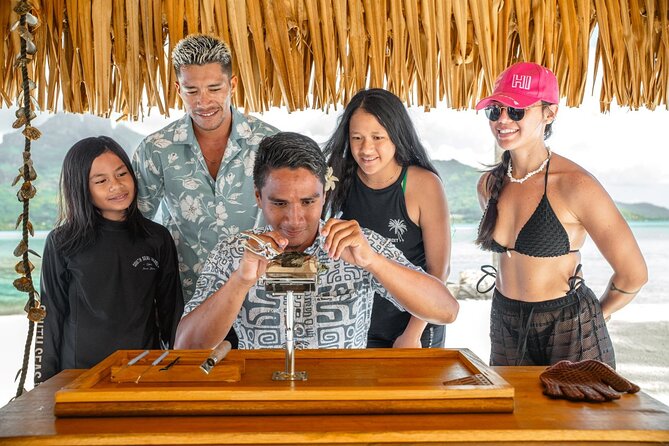
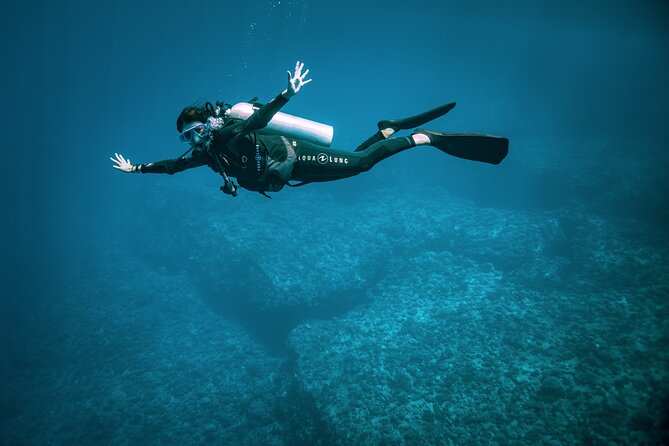
All scuba equipment is included. You do not need to bring tanks, regulators, or the basic gear supplied by the center. Rental equipment was described as good and, for one newly certified participant, newer than the equipment used during training.
Fit still matters. Tell the center your height, weight, and shoe size accurately when arranging the trip. One very tall diver found a wetsuit that worked, although it was loose around the middle. That is a reminder to speak up before leaving the dock if a suit, mask, or buoyancy vest does not feel right.
The small underwater group is one of the strongest features here. With no more than five certified divers per instructor, the guide can keep track of spacing, air, and confidence more easily than on a large boat operation.
The staff also seems comfortable with mixed ability levels. Groups are matched as closely as possible, and guides adjust their manner for people who are nervous or newly certified. Pascal, for example, was described as patient with first-time open-water participants who had only trained in a low-visibility lake.
That does not turn this into a beginner lesson. You must already hold an accepted certification and have dived within the previous year. If you are uneasy in open water, tell the crew before the first session so the guide can understand what support you need.
What the $235.69 price really covers
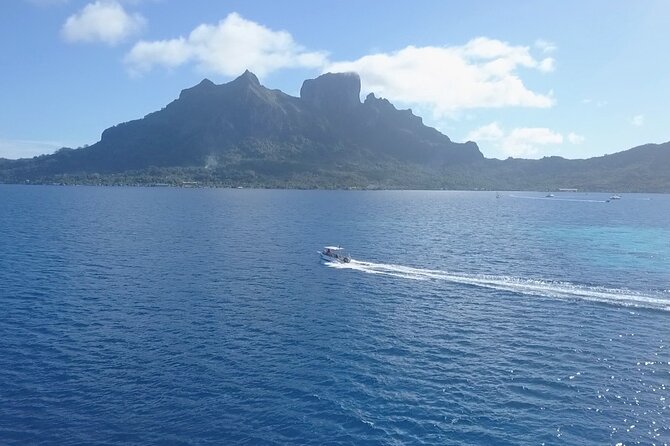
At $235.69 per person, this is not a budget activity. Bora Bora itself is expensive, and two guided scuba sessions with equipment, transfers, boat transport, instruction, refreshments, and the option of free Nitrox add real value.
The price makes the most sense if you want a proper guided morning rather than simply hiring equipment. You are paying for site selection, transport between locations, a small group, a boat built for divers, and local help finding marine life. If you already have your own equipment and transport, you may find the package less compelling, but most visitors will value the convenience.
The wildlife potential also matters. Seeing one manta ray is never guaranteed, yet Bora Bora offers a genuine chance of close encounters with several. Sharks, rays, turtles, and reef species may fill out the morning even if the mantas stay away.
I would compare the cost against the rest of your Bora Bora plans. For a certified diver with only one morning available, two different sites and included transfers make this a reasonable splurge. For someone hoping for a guaranteed manta show, the price cannot remove the basic uncertainty of nature.
Who should book this morning?
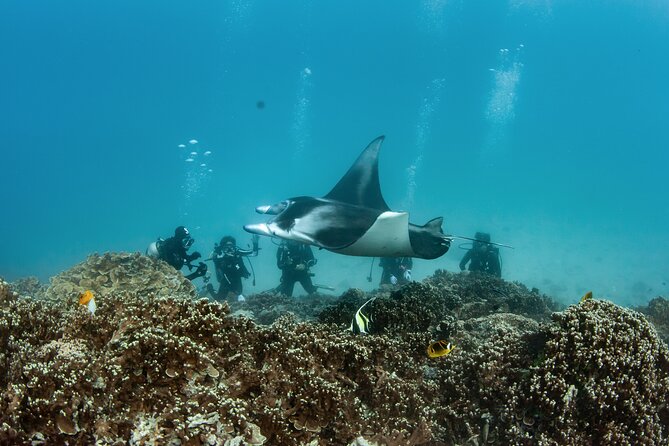
This suits certified divers who want a compact, well-supported outing and have dived within the last year. It is also a good match for newly certified people who want their first open-water experience with a guide who can keep the pace calm.
Families can participate from age 12, provided each person meets the certification and recent-scuba requirements. A family of five reportedly completed its first open-water sessions together after certification, seeing sharks, manta rays, and other sea life. That is encouraging, though every family member should be comfortable with the depth, equipment, and boat routine.
I would also recommend it to cruise ship passengers, since pickup arrangements can be coordinated and the morning schedule may fit a port visit. You need to confirm the meeting details carefully and leave enough time for the return, but the four-hour format is more manageable than a full-day excursion.
This is less suitable if you have not been underwater for more than a year, want a beginner lesson, dislike small currents, or need a guaranteed wildlife encounter. It is also not recommended within 12 hours of a local flight, so plan your schedule with that safety rule in mind.
Practical booking advice before you go
Confirmation is sent within 48 hours, subject to availability. The meeting point is Bora Diving Center in Bora Bora, and the activity ends back at the meeting point unless your arranged pickup and return location is part of the transfer plan.
Ask about pickup when you book, especially if you are staying at a resort or arriving by cruise ship. Confirm your certification level, recent scuba date, equipment sizes, and Nitrox qualification at the same time.
You must complete a form before entering the water. The weather can also cancel the outing. If that happens, you are offered another date or a full refund.
Cancellation is free up to 24 hours before the start time. Within 24 hours, refunds and changes are not accepted. Keep the local cutoff time in mind.
Should you book it?
I would book this if you are a current certified diver and want Bora Bora’s most exciting marine life without giving up an entire day. The strongest reasons are the small underwater groups, thoughtful animal practices, included transfers, and the chance to visit both lagoon and outer-reef sites.
Go in expecting a well-run morning, not a guaranteed manta performance. The current may affect the outer-reef session, your air supply may determine how long you remain underwater, and wildlife follows its own schedule.
For the right diver, the combination is strong: two different sites, capable guides such as Pascal, Niki, Nicholas, or Arthur, solid boat support, and a real possibility of mantas passing overhead. If you meet the recent-scuba requirement and can accept a little uncertainty, this is one of Bora Bora’s better ways to spend a morning.
FAQ
How long does the experience last?
The morning outing lasts approximately four hours. Operating hours are listed from 7:30 a.m. to noon, Monday through Sunday.
How many underwater sessions are included?
The package includes two sessions at two different sites, usually one in the lagoon and one outside the reef.
What certification do I need?
You must be certified to scuba to 18 meters, or 60 feet. Examples include PADI Open Water Diver, SSI Open Water Diver, CMAS one-star, Level 1, and NAUI Scuba Diver.
How recently must I have scuba dived?
Your last scuba session must have been less than one year ago.
Is equipment included?
Yes. Scuba equipment is included, along with pickup and drop-off. Fresh water, hot tea, and cookies are provided between the two sessions.
Can I use Nitrox?
Nitrox is free if you are Nitrox certified. Ask the operator for it when arranging the outing.
More Morning in Bora Bora
- Eco guided excursion to the lagoon of Moorea in transparent kayak 1/2 day morning
★ 5.0 · 61 reviews - Bora Bora: Morning 2 tank dive for certified divers
★ 5.0 · 11 reviews - Yoga at sunrise at Sofitel Moorea, overlooking Tahiti
★ 5.0 · 3 reviews - Private Morning Moorea 4WD Tour with Champagne
★ 5.0 · 3 reviews
Just added on Bora Bora
- Private Bora Bora Lagoon Snorkel Cruise with BBQ Picnic★ 5.0 · 3 reviews
- Private Reef Discovery Luxury Dream Day Tour in Bora Bora★ 5.0 · 3 reviews
- Private sunset cruise in Bora Bora★ 5.0 · 3 reviews
- Private Bora Bora Lagoon Experience★ 5.0 · 3 reviews
- Half a day to discover Bora Bora with O-sea★ 5.0 · 3 reviews
- Guided Tour of Bora Bora by Quad★ 4.0 · 3 reviews
- Bora Bora: Snorkeling and Fishing Tour with Lunch Option★ 3.0 · 3 reviews
- French Polynesia Snorkeling and 4X4 Adventure Tour with Buffet★ 4.5 · 3 reviews
Bora Bora Tours, compared.
Full Day Lagoon Group Tour in Bora Bora with Lunch
Read our review →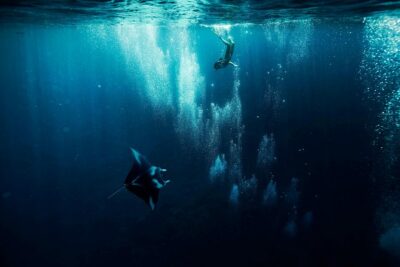
Half day Snorkeling Shared Boat Tour in Bora Bora
Read our review →
Full-Day Bora Bora Lagoon Cruise Including Snorkeling with Sharks and Stingrays
Read our review →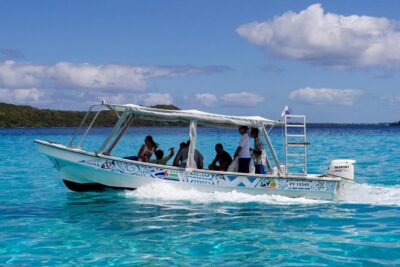
Bora Bora Eco Snorkel Cruise Including Snorkeling with Sharks and Stingrays
Read our review →
Bora Bora: Full day Lagoon Safari & Lunch on a Motu – ST
Read our review →
Browse the lists this tour appears in