
Reviewed · TAHITI TOURS
Papeete : walking tour
Papeete makes the most sense on foot, where a market stall, colonial-era building, cathedral, and waterfront park fit into one easy city walk. Pauline leads this two-hour introduction to Tahiti’s capital, linking local culture with French Polynesian history rather than simply pointing out buildings.
I like the relaxed pace and the useful mix of places: the municipal market gives you a close look at everyday Papeete, while the Assembly, cathedral, parks, and Town Hall fill in the city’s political, religious, and civic story. Pauline also offers practical suggestions for the rest of your time in town. The main consideration is heat, sun, and street noise. Comfortable shoes, water, and a hat matter, and headsets could help when traffic or city sounds rise.
Key points at a glance
- A focused two-hour route: See major central sights without committing to a full-day excursion.
- Pauline’s personal approach: Expect clear explanations, humor, and time for questions about Tahitian culture and history.
- The municipal market: A lively stop for local products and a look at daily life in Papeete.
- Flexible weekend planning: The Assembly may be replaced by Jacques Chirac Place on weekends and public holidays.
- Good first-day activity: The walk helps you get oriented before choosing shops, restaurants, or later island outings.
- Accessible city route: The stated stops are accessible to wheelchairs and scooters, though you should still be ready to walk and stand for two hours.
Why this short Papeete walk works
Papeete is often treated as a transit point for the rest of Tahiti. That is a mistake. The center gives you a compact introduction to French Polynesia, with public buildings, religious sites, gardens, market life, and reminders of the city’s French connection all within a manageable area.
This tour is built for that first look. You meet inside the Tahiti Tourist Office near the waterfront, then set off with Pauline for a guided walk through central Papeete. There is no coach ride and no long transfer eating into your time. Your two hours are spent seeing the city at street level.
I especially like the balance. The route is not only a list of grand buildings. The municipal market brings the tour down to everyday life, while the Assembly and Town Hall explain how the city functions. Bougainville Park adds a more open, leafy pause, and the Catholic Cathedral gives the route a clear historical and cultural landmark.
Pauline can guide in French, English, or Italian. Tours can be conducted in more than one language, though this is described as uncommon, so it is wise to expect one main language for your group rather than a repeated bilingual presentation.
more Papeete days to compare
- Shared 2 Hour Papeete Walking Tour
★ 5.0 · 13 reviews - Private 2 Hour Walking Tour in Papeete
★ 5.0 · 8 reviews - Aqua Safari Introductory Helmet Dive (Underwater Walk)
★ 5.0 · 428 reviews
Starting near the waterfront at Tahiti Tourisme
The meeting point is inside the Tourist Office of Papeete, near the waterfront. You do not need to search for a street corner or wait beside a particular monument. Go into the office and tell the agent you are waiting for Pauline.
That simple arrangement is useful if you are arriving by ship or have limited time in the center. It also gives you a clear starting landmark. Plan to arrive with your shoes already on and your water ready. The tour does not include hotel pickup, so getting to the Tourist Office is your responsibility.
The exact starting time depends on availability. One useful tip from the tour’s operation is that an earlier start can be sensible in warm weather. A morning departure may feel more comfortable than the middle of the day, especially if you are sensitive to sun or humidity. The reservation uses local Papeete time and date, so check carefully if you are booking from another time zone.
Bougainville Park and Papeete’s public face
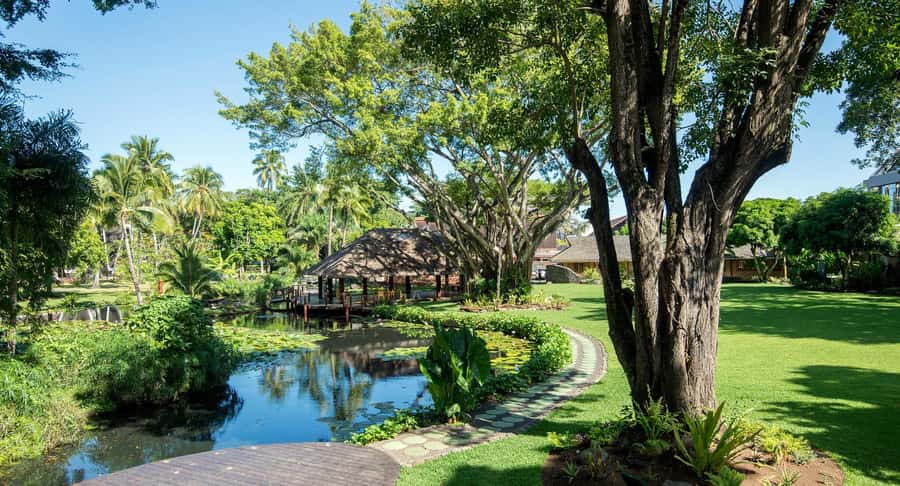
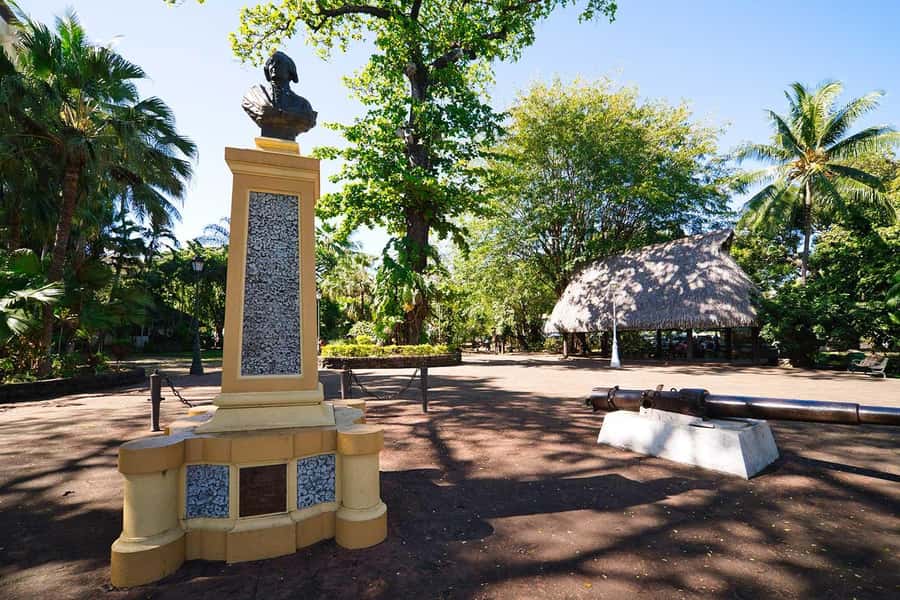
Bougainville Park is one of the opening stops. A park may sound like a small part of a city tour, but it provides a helpful change of pace after the meeting point and waterfront area.
Here, Pauline can begin placing Papeete in its wider setting and explain how public spaces fit into local life. The stop also gives you a chance to look at the city’s architecture and streets before moving into the more concentrated center.
The value of a guide is clear at this point. Without context, a park is simply a pleasant green pause. With Pauline, it becomes part of the story of Papeete, its public spaces, and its place in French Polynesia. Do not expect a long rest stop, but the route is described as leisurely, with several pauses along the way.
The Assembly of French Polynesia
The Assembly of French Polynesia brings a political dimension to the walk. It is one of the places where you can see the relationship between Polynesian identity and French administration reflected in the city itself.
Admission to the buildings visited is included, so you are not paying extra to enter the Assembly when it is part of the route. That makes the stop more useful than viewing the exterior alone, though the exact access inside can depend on opening conditions and the day’s schedule.
There is an important weekend and holiday change. The Assembly is closed on those days, so the tour can use Jacques Chirac Place as an alternative stop. This is not a reason to avoid a weekend booking, but you should know that the route may differ from the weekday version.
The alternative keeps the walk focused on public places and city life rather than leaving an empty gap in the itinerary. If seeing the Assembly itself is a priority, choose a weekday when possible.
Out of the water for a day on Papeete:
- 5 Hours Tahiti Island Tour – West and East Coast
★ 5.0 · 1,020 reviews - Moorea Street Food Tour
★ 5.0 · 410 reviews - Unique Tahiti Tour – personalised, small group east coast tour
★ 4.5 · 314 reviews - Unique Tahiti Tour – personalised, small group west coast tour
★ 5.0 · 286 reviews
The Catholic Cathedral and Papeete’s mixed identity
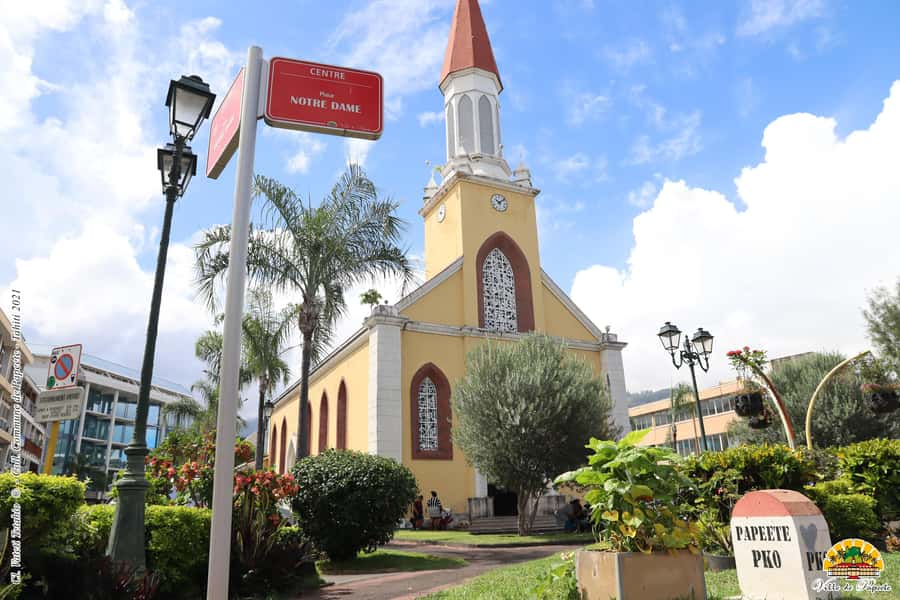
The historic Catholic Cathedral is another central stop. It adds a religious and architectural layer to the tour, showing that Papeete’s story is not only about government, commerce, and the waterfront.
Pauline explains the site as part of the city’s wider past and French heritage. This is where the tour’s cultural purpose becomes especially useful. You can look at the building, but a guide helps connect it with the changing identity of Tahiti and the role of Catholicism in the islands.
The cathedral is also a good example of the tour’s overall scale. You are not spending half a day inside one major monument. Instead, you move between several meaningful places, gaining a broad sense of the capital. If you prefer detailed architectural study, this route may feel brisk. If you want a well-rounded first look, the variety works well.
The municipal market is the liveliest stop
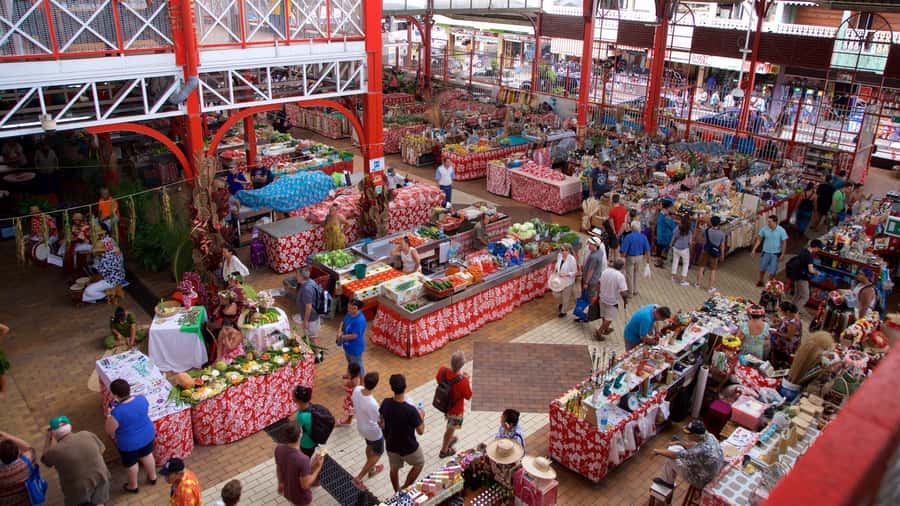
The municipal market is likely to be the most immediately engaging part of the walk. It is colorful, active, and tied to daily life in a way that civic buildings cannot match.
You can expect Pauline to explain the local products and help you understand what you are seeing. The market is not treated as a quick photo stop. It gives the tour a practical connection to food, shopping, and local routines.
I like this part because it keeps the experience grounded. Papeete is more than formal buildings and historic dates. At the market, you get a feel for what the city sells and how its commercial center works. Pauline can also answer questions about products and shopping, which is useful if you have free time after the tour.
Allow yourself a little patience here. Markets can be noisy and crowded, and the city’s sound is one reason headsets could be helpful. The tour does not list headsets as included, so stay close to Pauline and listen carefully when the surrounding noise rises.
Town Hall and the city’s civic center
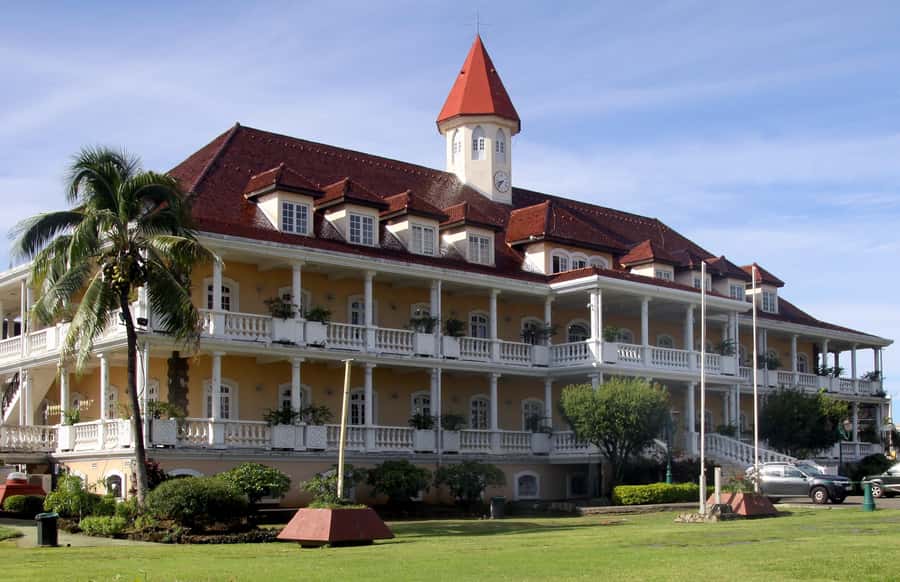
The majestic Town Hall is another major stop. Along with the Assembly, it gives you a look at Papeete’s civic architecture and public institutions.
The tour’s promise to discuss the architecture of various city buildings is important here. Pauline does not simply point out the Town Hall and move on. She uses the buildings to explain the city’s development and the French Polynesian setting in which they operate.
This is also a practical orientation point. After two hours, you should have a clearer sense of central Papeete and its main public landmarks. The route can help you decide where to return for more market browsing, shopping, or an independent walk.
Some parts of the city may feel less polished than the idealized image of a tropical capital. That is part of the point. The tour presents Papeete as a working city with government offices, traffic, markets, churches, and public gardens, not just as a postcard backdrop.
What Pauline adds to the experience
The guide is the heart of this tour. Pauline’s style combines information with a welcoming manner and a touch of humor. She explains Tahitian culture, Papeete’s past, and the French heritage of French Polynesia in a way that keeps the walk moving.
The strongest feature is the breadth of her subject matter. You can ask about history, culture, local products, flora, fauna, shopping, or places to visit later. That flexibility matters because a private or small group setting allows the conversation to follow your interests more easily.
You should not expect a formal lecture delivered without interruption. The best use of the tour is to ask questions as you go. If you are curious about what you see at the market or want suggestions for the rest of your stay, speak up.
The tour can be booked as a private group, which may suit families, couples, or small parties wanting more control over the pace. A standard group can still work well, but the exact level of individual attention will depend on the number of people attending.
Pace, heat, rain, and accessibility
This is a leisurely two-hour walk, but leisurely does not mean effortless. You should be comfortable walking and standing for the duration. The route uses city sidewalks and includes several stops, so it is not a hike or a demanding outdoor trek.
Wear comfortable shoes. Add a sun hat and bring a small bottle of water. Sunscreen is also a sensible addition, based on the practical advice surrounding the tour, though only shoes, a hat, and water are specifically listed as items to bring.
Weather can change the feel of the experience. Rain does not automatically end the tour, and Pauline has continued in wet conditions, but you should be ready for a less comfortable walk if the skies open. There is no stated weather guarantee, so a light rain layer could be useful if conditions look uncertain.
The tour information states that all sites are accessible to wheelchairs and scooters. That is a valuable feature for visitors who need step-free access. Still, accessibility does not remove the need to move between sites on foot or to remain outside at times, so consider your own walking and standing limits.
City noise is the one clear comfort issue to keep in mind. Papeete’s streets can be loud, especially near traffic and the market. Pauline’s voice may be easier to follow in a small group, but headsets are not listed as part of the tour.
Is $58 a fair price?
At $58 per person, this is not the cheapest way to wander through Papeete. You could walk past several of these sights on your own for free. The value comes from the explanation, the organized route, included admission to buildings visited, and the chance to ask a local guide what you are looking at.
For a first visit, that can be worthwhile. Two hours is long enough to build a useful map of the center without taking over your day. It is especially good value if you have just arrived, have limited port time, or want context before exploring independently.
The price makes less sense if you already know central Papeete well or prefer unstructured wandering. It also does not include transport to the meeting point, food, or shopping. Think of it as a compact orientation tour, not a full-day cultural program.
The free cancellation option up to 24 hours before the start and the reserve-now, pay-later option reduce some booking risk. These details help if your island schedule may shift, though you still need to check the local date and time carefully.
Who should book this Papeete experience?
I would choose this walk if you want a calm first look at the capital and prefer learning through conversation. It suits first-time visitors, cruise passengers with a short window ashore, couples, families, and anyone who wants history and culture without a long bus excursion.
It is also a good choice for people who enjoy markets and public buildings more than staged entertainment. The route gives you ordinary city details alongside major sights, and Pauline’s answers can help shape the rest of your stay.
You may want something else if you are looking for waterfalls, beaches, mountain scenery, or a full-island trip. This experience stays in Papeete. It is a city introduction, not a tour of Tahiti’s natural attractions.
The two-hour length is a strength for many people. You get a useful overview, then keep the afternoon free. If you are visiting on a weekend or public holiday, remember that the Assembly may be replaced by Jacques Chirac Place.
Should you book it?
Book this tour if you want Papeete explained rather than merely photographed. The combination of Pauline’s warm, flexible guiding, the municipal market, public buildings, cathedral, parks, and easy pace gives you a sensible introduction to the capital.
I would book it early in your stay, preferably at a cooler morning time if available. Bring water, a hat, comfortable shoes, and enough curiosity to ask questions. Skip it only if you already know the city well or would rather spend your limited time on an outdoor excursion beyond the center.
FAQ
How long is the Papeete walking tour?
The guided walk lasts two hours.
Where does the tour meet?
Meet inside the Tourist Office in Papeete, near the waterfront. Tell the agent that you are waiting for Pauline.
Which places are included?
The route includes Bougainville Park, the Assembly of French Polynesia, the Catholic Cathedral, the municipal market, and Town Hall. The Assembly may be replaced by Jacques Chirac Place on weekends and public holidays.
Is the Assembly included on weekends?
The Assembly is closed on weekends and public holidays. An alternative stop at Jacques Chirac Place can be arranged instead.
Which languages are available?
The guide can conduct the tour in French, English, or Italian. Tours in multiple languages are possible but rare.
Is the tour wheelchair accessible?
The tour information states that all sites are accessible to wheelchairs and scooters. You should still be able to walk and stand during the two-hour route.
What should I bring?
Bring comfortable shoes, a sun hat, and a small bottle of water. Sunscreen is also sensible for a daytime city walk.
Can I cancel or pay later?
You can cancel up to 24 hours in advance for a full refund. The reserve-now, pay-later option lets you hold a place without paying immediately.
Just added on Papeete
- Papeete City Tour, 3hours (on Tahiti)★ 5.0 · 3 reviews
- Tahiti: Northeast Coast Waterfalls&Viewpoints Half Day Tour★ 5.0 · 3 reviews
- Tahiti: Full Day Tour with Private Flight EN Cessna (Moorea & Tahiti)★ 3.5 · 3 reviews
- Private Tour of Tahiti’s East Coast 3hours★ 5.0 · 4 reviews
- Tahiti : Tour de l’île (Full Day) avec taxi boat (Teahupoo)★ 5.0 · 5 reviews
- Private : Tahiti Museum & Circle Island Tour, Afternoon Tour (5h)★ 4.0 · 6 reviews
- Private 2 Hour Walking Tour in Papeete★ 5.0 · 8 reviews
- Shared 2 Hour Papeete Walking Tour★ 5.0 · 13 reviews
Tahiti Tours, compared.
5 Hours Tahiti Island Tour – West and East Coast
Read our review →
Crossing Island of Tahiti 4×4 Mountain, Waterfall, River, Basins
Read our review →
Découvrez le Mana durant la traversée de Tahiti en 4×4 Safari
Read our review →

Unique Tahiti Tour – personalised, small group east coast tour
Read our review →

Browse the lists this tour appears in